Can You Steam Clean a Couch? A Goehner’s SteamVex Fabric Method
Quick answer
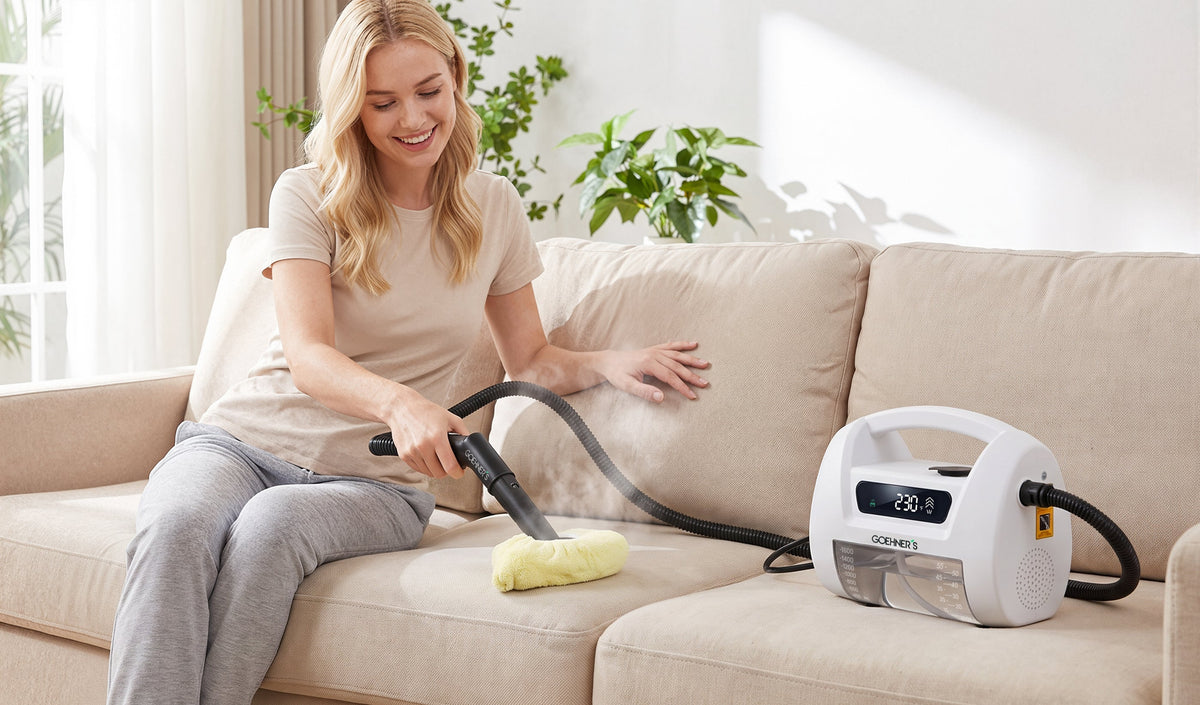
Yes. Goehner’s SteamVex steam cleaner (SteamVex) refreshes fabric couch surfaces with three adjustable steam-output levels, a bonnet-covered large brush and even passes across each panel. Level 1 delivers the lightest output for a gentle surface refresh, Level 2 adds output for everyday attached soil and Level 3 provides the strongest output for heavier surface buildup.
The bonnet completes the moisture-control system: it buffers direct hot-steam contact, absorbs moisture and loosened dirt, and expands the area covered by every movement.
See SteamVex in Action
Explore the high-temperature steam, large tank, controlled output and extended reach behind this cleaning workflow.
Explore SteamVexMatch the SteamVex setup to each couch area
| Couch area | SteamVex setup | Cleaning action | Practical benefit |
|---|---|---|---|
| Seat cushions | Large brush head + clean bonnet | Even overlapping passes | Broad coverage with moisture pickup |
| Armrests | Level 1 or 2 + bonnet | Move from the top surface down the side | Surface oils and attached soil lift into the cloth |
| Back panels | 5 ft hose + light-touch trigger | Work in long, consistent paths | Easy reach and precise start-stop control |
| Seams and edges | Focused attachment + clean towel | Loosen residue, then collect it immediately | Detail access where broad wiping misses |
| Removable cushions | Bonnet pass + upright airflow | Clean each face, then expose it for drying | Connected cleaning and dry-finish routine |
Why the bonnet changes fabric-surface cleaning
| Bonnet function | How it works | Fabric-cleaning benefit |
|---|---|---|
| Buffers direct steam | Places washable cloth between the large brush head and fabric | Spreads contact across a broader area |
| Absorbs moisture | Collects condensation during the pass | Supports a lower-moisture surface routine |
| Expands coverage | Uses the full large-brush contact area | Cleans cushions and panels more evenly |
| Lifts loosened dirt | Picks up surface soil as SteamVex softens it | Combines steam delivery and soil collection in one movement |
The removable bonnet can be turned, replaced and washed, keeping the contact surface fresh across repeated upholstery sessions.
How to refresh a fabric couch with SteamVex
Step 1: vacuum thoroughly
Vacuum surface dust, food crumbs, pet hair and particles from the cushions, seams, armrests and back panels. Removing loose debris first gives SteamVex a clean fabric surface and keeps the bonnet focused on attached soil.
Step 2: fit the bonnet over the large brush head
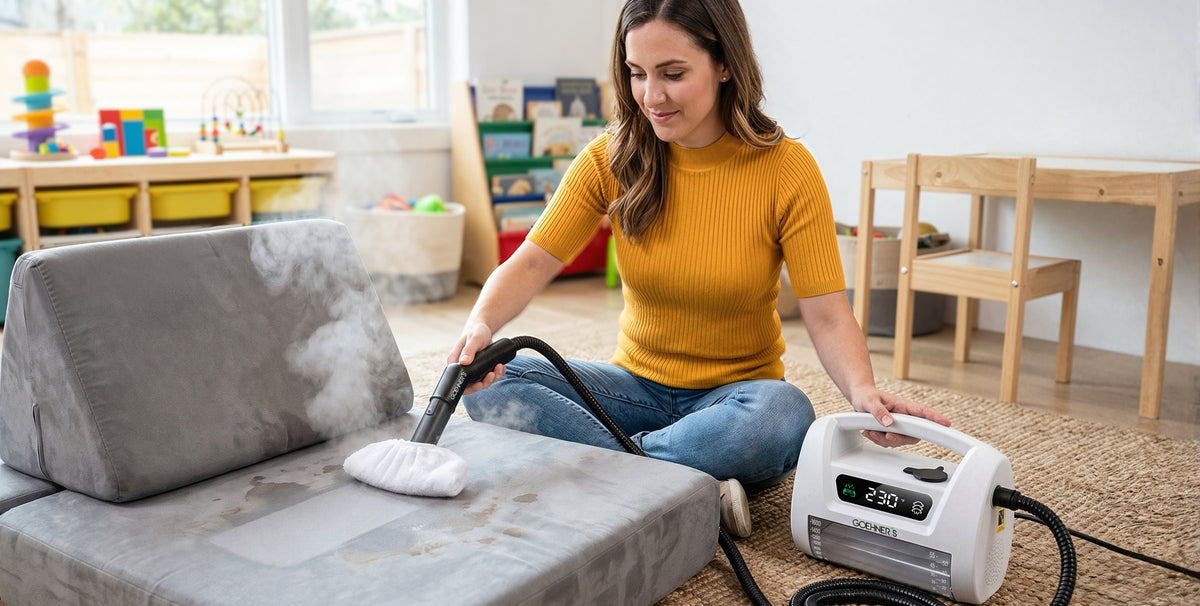
Fit a clean washable cloth bonnet over the large brush head. The broad head expands the cleaning area while the bonnet buffers direct hot-steam contact, absorbs moisture and condensation, and picks up loosened dirt as the tool moves.
Keep a second clean bonnet ready so the contact surface can stay fresh across several couch panels.
Step 3: select the SteamVex level and keep moving
Begin with SteamVex Level 1 and move the bonnet-covered brush in smooth, overlapping passes. Increase the level when the surface buildup calls for more output while keeping the movement even across the panel.
The high-sensitivity capacitive touch trigger starts steam with a gentle touch and hold, then stops when the finger lifts. That light-touch control reduces hard squeezing through longer upholstery passes.
Step 4: work evenly across a complete panel
Complete one cushion, armrest or back panel with consistent overlapping paths before moving to the next. Turn or replace the bonnet as it collects dirt so every new pass begins with a clean contact surface.
The large brush head helps keep coverage even while the 5 ft hose lets the main unit remain on the floor beside the couch.
Step 5: let the couch dry completely before use
Keep air moving through the room and stand removable cushions upright so more of the fabric is exposed. The bonnet has already collected part of the moisture during the cleaning pass; airflow completes the dry finish before the cushions return to their normal position.
What SteamVex does for fabric upholstery
SteamVex gives fabric couches a water-only surface-refreshing method for everyday dust film, light body oils, pet-contact residue and attached surface soil. Focused heat loosens the buildup while the bonnet collects the released dirt and moisture.
The method is especially useful across seat cushions, armrests, back panels, fabric sides and broad textile sections where an even, bonnet-covered pass can refresh the visible surface.
Where Goehner’s SteamVex fits in couch care
Goehner’s SteamVex combines the features that make fabric-surface cleaning practical: three steam levels, a high-sensitivity capacitive touch trigger, a large brush head, washable cloth bonnets and a separate main unit with a 5 ft hose.
The 1.6 L / 54 fl oz tank supports about 30 minutes on Level 1, while the 13.2 ft cord and 5 ft hose provide up to approximately 18 ft of working reach around sectionals, sofas and removable cushions.
Together, the system buffers direct steam, manages surface moisture, expands coverage and collects loosened dirt in one controlled pass. See the current SteamVex configuration and included attachments in the handheld steam cleaner collection.
Frequently asked questions
Why use a bonnet-covered large brush?
The SteamVex fabric method is built around controlled contact: a bonnet-covered large brush, selectable output, even movement and airflow. Those tools give fabric panels a measured surface-refreshing pass instead of concentrated treatment from a bare nozzle.
Can you steam clean a microfiber couch?
SteamVex works with a washable cloth bonnet over the large brush head, making it well suited to broad textile panels. The bonnet buffers direct steam, absorbs moisture and loosened dirt, and keeps the pass even across the fabric.
How long should you wait before sitting on a steam-cleaned couch?
Keep airflow moving until the fabric and cushion surface have returned to their normal dry feel. Standing removable cushions upright increases exposed area and helps the couch move efficiently from cleaning to the final dry finish.
A complete SteamVex fabric-couch routine
A strong SteamVex couch routine follows five connected steps: vacuum, fit a clean bonnet over the large brush head, select the steam level, move evenly across each panel and finish with airflow.
The bonnet does four jobs at once—buffers direct hot-steam contact, absorbs moisture, expands the cleaning area and carries away loosened dirt—turning fabric upholstery into a practical water-only SteamVex task.
Refresh Fabric Upholstery With SteamVex
SteamVex gives fabric upholstery a water-only surface-refreshing method built around adjustable output, a bonnet-covered large brush and even coverage.
Choose Goehner’s SteamVex

